
What Are The Grandfathered Health Plans Advantages?
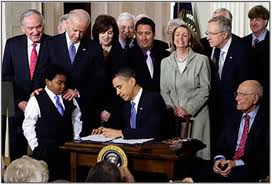 Signing the Affordable Care Act
These grandfathered plans are not subject to the regulations created by health care reform. These grandfathered plans will continue to exist and provide health coverage to you, even after January 1st, 2014. The primary benefit is that these plans will not have to provide all the extra benefits that ACA compatible health plans are required to have.
 With less baggage to carry, the hope is that grandfathered plans would be lower cost than the new Health Care Reform (HCR) plans.
What Are The Disadvantages Of Grandfathered Health Plans?
The disadvantages of grandfathered health plans are:
- They’re not required to have free preventive care
- They have a shrinking pool of people within each plan
- Typically a “sicker” pool of plan subscribers, as healthy people move to other plans
- Faster rising premiums as the plan costs are spread across fewer people in the plan
- No access to HCR subsidies to help pay for the cost of a grandfathered health plan
It’s hard to say what the primary disadvantage of grandfathered plans is, because each will be significant to different people. However, the most straightforward disadvantage is that most grandfathered plan do not provide free preventive care. So every year when you get a physical and the doctor orders a large set of blood and urine tests, you end up paying for those tests are part of your plan deductible, and you probably pay the doctor’s office a copay for the visit. The new health insurance plans today provide these benefits for free. This can be very significant if you are over 50 and need a periodic colonoscopy. Colonoscopies are free in new health plans, and cost between $600 to $1000 if your plan does not offer them for free.
 Shrinking pool of health plan subscribers
With fewer people in the plan, and greater medical expenses, the premiums for these older plans can increase faster than the rates for newer plans. This is not the kind of plan you want to be stuck in.
The last straw for grandfathered plans is that they are outside the oversight of the Affordable Care Act (ACA), so you will not be able to qualify for subsidies to help pay for the increasing costs.
Given these disadvantages, if you are able to qualify for a new health insurance plan, it’s beginning to sound like that would be a better option for you.
What Has Changed With ObamaCare?
At this point in our discussion, Barry was beginning to see what was happening to his health plan, and he became a little frustrated. He asked me why his agent and Anthem were telling him to stay in his current plan and pay the high premiums.
Click page 3 below to find out why…